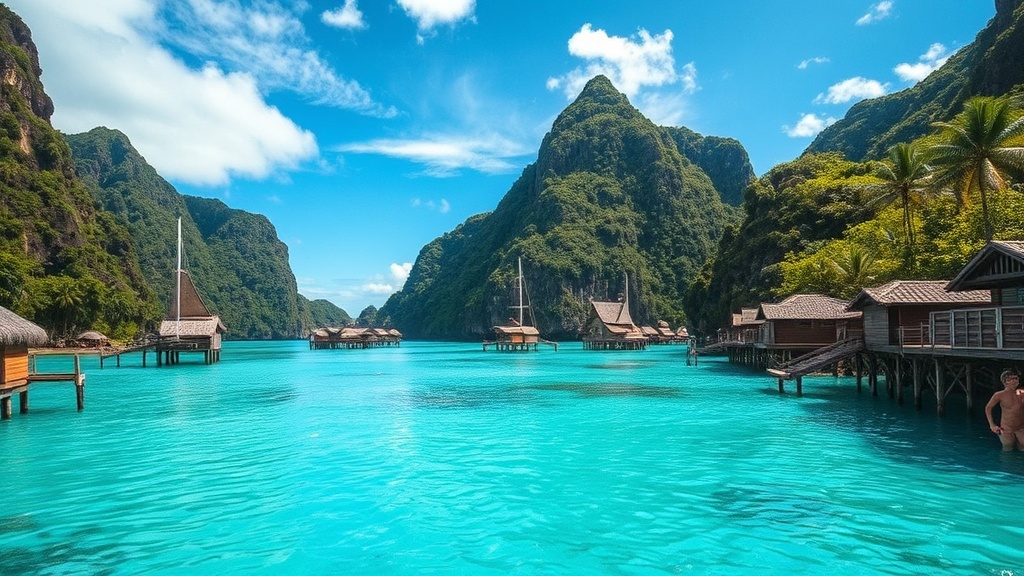
Hidden Lagoon Gems of the South Pacific

The Sapphire Pool of Bora Bora
Mo'orea's Secret Emerald Inlet
The Floating Gardens of Aitutaki
Most travelers assume that finding a secluded, untouched tropical paradise in the South Pacific requires a massive budget or a private yacht. That's a mistake. While the high-end resorts in Bora Bora or Fiji get all the press, the real magic often happens in the lesser-known lagoons tucked away between remote atolls. This post covers five specific hidden lagoon gems across the South Pacific—from Vanuatu to the Cook Islands—detailing exactly what you'll find there, how to get to them, and what gear you actually need to survive the trek. If you want to avoid the crowds and find water that looks like a filtered photograph, you're in the right place.
Where are the best hidden lagoons in the South Pacific?
The best hidden lagoons are found in the remote archipelagos of Vanuatu and the Cook Islands, where accessibility is lower but the water clarity is unmatched. You won't find these spots on every mainstream cruise itinerary. Instead, you'll find them near small local islands that require a boat transfer or a short hike through dense tropical vegetation.
One of my absolute favorite spots is the Blue Lagoon in Vanuatu. It isn't a massive ocean bay, but a freshwater spring-fed pool that flows into the sea. The water is a startling shade of turquoise—almost unnaturally so—and it stays cool even when the tropical sun is punishing. It's a local favorite, but if you arrive before 9:00 AM, you'll likely have the entire place to yourself.
Another standout is the Lagoon of Aitutaki in the Cook Islands. While Aitutaki is a known destination, most people stick to the main lagoon area. If you hire a local boatman to take you to the outer islets, you'll find sandbars that appear and disappear with the tide. It's pure magic. (Just don't forget to tip your guide; it's standard practice here.)
For those who want something even more rugged, look toward the Marquesas Islands in French Polynesia. These aren't your typical white-sand paradise islands; they are dramatic, volcanic, and steep. The small, emerald-colored lagoons tucked into the volcanic bays offer a sense of isolation that is hard to find anywhere else in the Pacific. It’s not easy to get to, but the payoff is massive.
A Quick Comparison of Top Lagoon Destinations
| Location | Water Type | Best For | Access Difficulty |
|---|---|---|---|
| Blue Lagoon, Vanuatu | Fresh/Salt Mix | Swimming & Relaxation | Easy (Road access) |
| Aitutaki, Cook Islands | Saltwater | Snorkeling & Boating | Moderate (Boat required) |
| Marquesas, French Polynesia | Saltwater | Adventure & Photography | Hard (Small plane/Boat) |
| Nuku Hiva, Marquesas | Saltwater | Rugged Exploration | Hard (Remote) |
How much does it cost to visit remote South Pacific islands?
Visiting remote islands is generally more expensive than visiting mainstream hubs like Tahiti because of the logistics involved in transporting food, fuel, and gear. You should budget significantly more for boat charters and local transport than you would for a standard beach day in Hawaii or Bali.
Here's the reality: a private boat charter in the Cook Islands or Vanuatu can easily run you between $150 and $300 USD for a few hours. If you're trying to save money, look for "island hopping" tours that group several travelers together. That said, the cost of food and basic amenities on these remote islands is often higher than on the mainland because almost everything is imported. I've seen a simple sandwich cost $12 USD on a small islet in the Marquesas. It's frustrating, but it's part of the deal when you're going off the beaten path.
When planning your budget, keep these three categories in mind:
- Transport: This is your biggest variable. Small propeller planes and local outrigger boats are the only way to move around.
- Gear: You can't just run to a local pharmacy if your snorkel mask breaks. You need to bring high-quality gear with you.
- Food/Water: Always pack more water than you think you'll need. Desalination technology is rare in these remote spots.
For official travel advisories and entry requirements, I always recommend checking the U.S. Department of State website before booking. Rules regarding island access and local regulations can change without much notice.
The Essential Gear List
Don't show up to a remote lagoon with just a pair of flip-flops. You'll regret it. I've seen too many people try to hike through tropical brush in basic sandals and end up with a nasty scrape or a twisted ankle. You need gear that can handle humidity, salt, and uneven terrain.
- High-Quality Snorkel Mask: Don't buy the cheap $10 ones from a big-box store. A Cressi or Aqua Lung mask will provide a much better seal and won't leak when you're exploring deep coral heads.
- Waterproof Dry Bag: This is non-negotiable. If you're in a boat, your phone and camera are at risk. A YETI or Sea to Summit dry bag is worth every penny.
- UV Protection: The sun in the South Pacific is brutal. I use Sun Bum sunscreen because it's reef-safe—which is important, since we want to protect these delicate ecosystems.
- Sturdy Water Shoes: Many of these lagoons have sharp coral or volcanic rock at the entry point. A pair of Keen sandals or dedicated water shoes will save your feet.
What are the best times to visit the South Pacific?
The best time to visit the South Pacific is during the dry season, which typically runs from May to October across most of the region. During these months, the weather is more predictable, the humidity is slightly lower, and the water clarity is at its absolute peak.
If you travel during the wet season (November to April), you're going to deal with heavy tropical downpours and higher humidity. The catch? It's much cheaper. If you're on a strict budget and don't mind a little rain, you can find incredible deals on flights and accommodation. However, be aware that tropical storms can occasionally disrupt boat schedules and even ground small planes. If you're planning a trip to a very remote atoll, I wouldn't risk it during the peak of cyclone season.
It's worth noting that even in the "dry" season, it is still the tropics. It's going to be hot. It's going to be humid. There is no way around that. If you're someone who hates sweating, you might find the South Pacific a bit much regardless of when you go.
For more detailed climate data and historical weather patterns, you can check out the Wikipedia page on the South Pacific climate. It's a great way to see how different island groups (like Fiji versus the Marquesas) might have slightly different seasonal shifts.
"The most beautiful places aren't found on a map; they're found when you're willing to get a little lost."
When you're exploring these lagoons, remember that you are a guest in a very fragile ecosystem. Please, for the love of all things tropical, use reef-safe sunscreen. Standard sunscreens contain chemicals that actually bleach the coral. If we want these hidden gems to stay hidden and beautiful, we have to treat them with respect.
One last tip: always carry a physical map or download offline maps on your phone. GPS can be spotty when you're surrounded by high volcanic cliffs or deep in a dense jungle. I never leave my hotel without a downloaded version of Google Maps for the specific island I'm on. It's a small step that prevents a lot of headaches.