How to String Together Islands Without Missing the Last Ferry

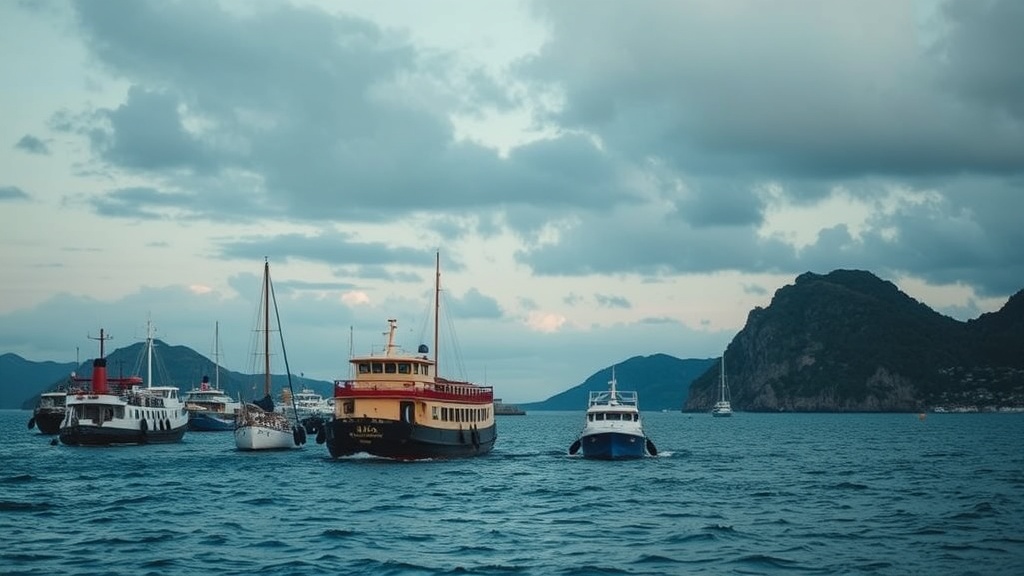
You have just spent three perfect days on Koh Phi Phi. The limestone cliffs glowed at sunset, the beach barbecues were everything the guidebooks promised, and you even found that quiet cove on the island's far side. Now you are sitting at the pier with your duffel bag, watching the 2 PM ferry pull away while clutching a ticket for the 4 PM boat that—according to a hastily scrawled note taped to the window—has been "delayed indefinitely due to mechanical issues." Your hotel in Koh Lanta expects you by dinner. The booking is non-refundable. And the next confirmed departure is tomorrow morning.
This scenario plays out daily across island chains from Greece to Indonesia. Island-hopping looks effortless on Instagram—just a string of turquoise dots connected by invisible threads—but the reality involves weather windows, limited vessel capacity, and scheduling quirks that can strand even seasoned travelers. Building an itinerary that actually works requires more than picking pretty destinations. You need to understand how island transportation operates as a system.
How Do Ferry Schedules Actually Work Between Islands?
Ferry timetables in island regions operate on seasonal, not annual, schedules. The boat that leaves at 9 AM in July might not exist in February. Operators adjust routes based on demand, weather patterns, and maintenance windows—often without updating their websites until days before the change takes effect.
In the Greek Islands, the distinction between "high season" (June through August) and "shoulder season" (April-May and September-October) determines everything. The popular Cyclades route connecting Mykonos, Naxos, and Santorini runs daily in summer but drops to three times weekly in late autumn. Some smaller islands lose all scheduled service entirely, switching to on-demand water taxis that require 24-hour advance booking.
Southeast Asian island chains present different complications. Thailand's Andaman Coast operates on a monsoon calendar—boats to the Similan Islands shut down completely from May through October. Indonesia's Komodo National Park routes depend on liveaboard schedules that shift based on diving season and park fee structures. The Philippines, with over 7,000 islands, has no centralized ferry database; you are researching individual operators like 2GO Travel for long-haul routes and local bangka boats for island-to-island hops.
Smart travelers book the first ferry of the day, not the last. Morning departures face fewer delays because vessels have overnighted at the departure point. Afternoon boats accumulate delays as the day progresses—engine troubles in one port cascade down the route like dominoes. That 4 PM ferry you are eyeing? It is the most likely to cancel when weather turns or mechanical issues arise.
What Happens When Your Boat Gets Canceled?
Cancellations are not exceptions in island travel—they are probabilities you must plan for. Mechanical failures, sudden weather changes, and crew shortages (especially around local holidays) can erase your carefully constructed itinerary in minutes.
The key is building buffer days into transitions. Never schedule an international flight for the same day you plan to leave an island. The math is simple but frequently ignored: if you need to catch a 6 PM flight from Phuket, do not book a ferry from Koh Phi Phi arriving at 3 PM. That three-hour window disappears the moment your morning boat develops engine trouble. Instead, spend your last night on the mainland. The extra hotel cost beats missing a $1,200 flight.
Alternative transportation exists on most major routes, but it costs more. Private speedboat charters can replace canceled ferries in Thailand and the Maldives—expect to pay $300-800 depending on distance and negotiation skills. Seaplanes serve the Maldives and some Caribbean islands, though weight restrictions limit luggage. Helicopter transfers operate in French Polynesia and Hawaii at premium rates.
Travel insurance becomes valuable here, but read the fine print. Standard policies often exclude "common carrier delays" unless they exceed 12 or 24 hours. "Cancel for any reason" coverage costs more but protects against the cascading effects of missed connections. Keep documentation—screenshot canceled ferry notices, save receipts for alternative transport, photograph weather reports. Claims require proof.
Where Should You Book Stays to Avoid Getting Stuck?
Accommodation location matters more than amenities when your transportation fails. The difference between a stressful delay and an inconvenience often comes down to how far you are from the pier.
On small islands, book within walking distance of the main jetty. That cliffside villa twenty minutes up a dirt road looks spectacular in photos—until you are hauling luggage down that same road in tropical rain because your afternoon boat got moved to morning. Proximity to the ferry terminal gives you flexibility. You can check conditions personally, negotiate with boat operators face-to-face, and pivot quickly if plans change.
Larger islands require different strategies. In the Canary Islands, base yourself near the main port city rather than remote resort areas if you plan extensive inter-island exploration. Tenerife's Los Cristianos ferry terminal connects to La Gomera, La Palma, and El Hierro—staying nearby eliminates taxi costs and traffic variables. Similarly, in Hawaii, accommodations near Lahaina (Maui) or Kailua-Kona (Big Island) position you closer to inter-island flight terminals than remote resort zones.
Booking flexibility beats non-refundable rates. The $20 nightly savings on a non-refundable room evaporates when you need to pay for an unexpected extra night because your ferry canceled. Look for free cancellation policies up to 24 or 48 hours before arrival. Island-specific booking platforms sometimes offer better flexibility than major chains—Booking.com and similar sites aggregate options, but local guesthouses often accept phone reservations with no penalty for date changes.
How Should You Structure a Realistic Island-Hopping Timeline?
The temptation is to maximize—see six islands in ten days, hit every highlight, optimize every moment. This approach guarantees stress and often failure. Instead, think in terms of "island groups" rather than individual destinations.
Cluster your itinerary geographically. In Croatia, focus on either the northern islands (Krk, Rab, Pag) or the southern Dalmatian chain (Hvar, Korčula, Mljet)—not both. The distance between Split and Zadar takes six hours by bus; ferries do not connect the two regions efficiently. Similarly, in French Polynesia, commit to either the Society Islands (Tahiti, Moorea, Bora Bora) or the Tuamotus—attempting both in one trip requires expensive flights and sacrifices depth for breadth.
Plan for three full days minimum per island. Day one is arrival and orientation—finding your accommodation, understanding the local transport situation, identifying where boats actually depart (not where the map says they depart). Day two is your main activity. Day three provides buffer for departure logistics and perhaps a final morning exploration. Anything less creates a frantic pace where you spend more time in transit than experiencing the destination.
Build in one "flex day" per week of travel. This unscheduled buffer absorbs delays without destroying your entire itinerary. If ferries run on time, you have a bonus beach day. If they do not, you have margin to adjust without panic.
What Should You Pack for Island Transit Uncertainty?
Your luggage strategy directly impacts your ability to pivot when plans change. That massive rolling suitcase perfect for European train stations becomes a liability on island piers—uneven planks, steep gangplanks, and the occasional wade through shallow water to board smaller vessels.
Pack in a backpack or duffel you can carry comfortably for twenty minutes. Soft bags squeeze into small ferry storage areas and fit in water taxi compartments where hard-shell luggage refuses to go. Keep essentials in a daypack you never surrender to cargo holds—medications, electronics, one change of clothes, travel documents. If your main bag ends up on a different boat (rare but possible during rushed loading), you can function for 24 hours.
Bring cash in small denominations. Many smaller ferry operators, particularly in Indonesia and the Philippines, do not accept cards. ATM availability varies wildly between islands—some developed tourist destinations have multiple machines, while smaller islands operate entirely on cash with no withdrawal options. US dollars work as backup in many island chains, but local currency gets better prices.
Download offline maps before departure. Cell service disappears between islands, and pier Wi-Fi ranges from nonexistent to unusable. Google Maps offline functionality lets you handle unfamiliar ports even without connectivity. Screenshot your booking confirmations—do not rely on loading confirmation emails on spotty airport Wi-Fi.
The best island-hopping itineraries embrace uncertainty rather than fighting it. Build padding into your schedule, stay flexible with accommodation, position yourself strategically near transport hubs, and pack for improvisation. The goal is not eliminating the possibility of getting stuck—it is ensuring that when delays happen (and they will), they become part of the story rather than the end of it.