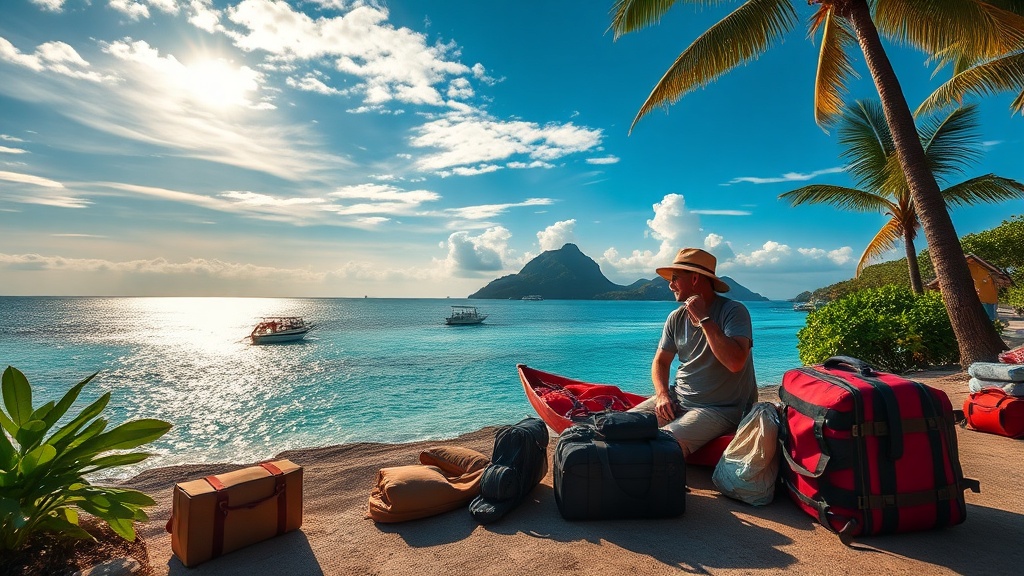
Packing for Island Hopping Without Overloading Your Bag

Why your suitcase weight matters more than you think
A single extra pound of weight can be the difference between a smooth transit and a stranded afternoon at a remote pier. In many remote archipelagos, local boat operators and small bush planes have strict weight limits—sometimes much stricter than commercial airlines. If you pack too much, you might find yourself paying extra fees or, worse, being unable to board a small skiff. This guide covers how to select gear that works hard, stays lightweight, and survives the salt air.
Packing for a multi-island trip isn't about bringing everything you might need; it's about bringing exactly what you'll use. You want a kit that handles a sudden tropical downpour, a sandy beach, and a decent restaurant dinner without requiring three different bags. Let's look at how to build a modular, efficient kit.
How much weight should I carry for island hopping?
The short answer? As little as possible. If you're moving between islands via small boats or local ferries, a heavy backpack or a hard-shell rolling suitcase is a liability. You'll be lifting, carrying, and hauling your gear over uneven sand or up steep wooden stairs. Aim for a single, durable backpack between 35 and 45 liters.
A backpack keeps your hands free—which is vital when you're balancing on a moving boat or holding onto a railing. If you must bring a larger bag, ensure it has backpack straps. Dragging a suitcase through a sandy tropical beach is a recipe for frustration (and broken wheels).
- The Lightweight Rule: If you haven't worn it in the last three trips, leave it home.
- The Fabric Test: Stick to synthetic blends or merino wool. Avoid heavy denim; it takes ages to dry in high humidity.
- The Volume Check: Pack your bag a week before you leave to see if you can actually zip it shut easily.
What are the best clothes for tropical island weather?
Tropical weather is a paradox. It's hot and humid, yet the air conditioning in transit hubs or restaurants can feel freezing. You need layers that breathe but also offer protection. I always suggest a "base and cover" approach. Your base layers should be moisture-wicking (think linen or technical synthetics), and your cover layers should protect you from the sun and bugs.
Sun protection is often overlooked. A wide-brimmed hat and long, lightweight sleeves are more effective than constant applications of sunscreen. Also, don't forget a lightweight rain shell. A tropical storm can roll in out of nowhere, and you'll want that immediate barrier against the wind and rain.