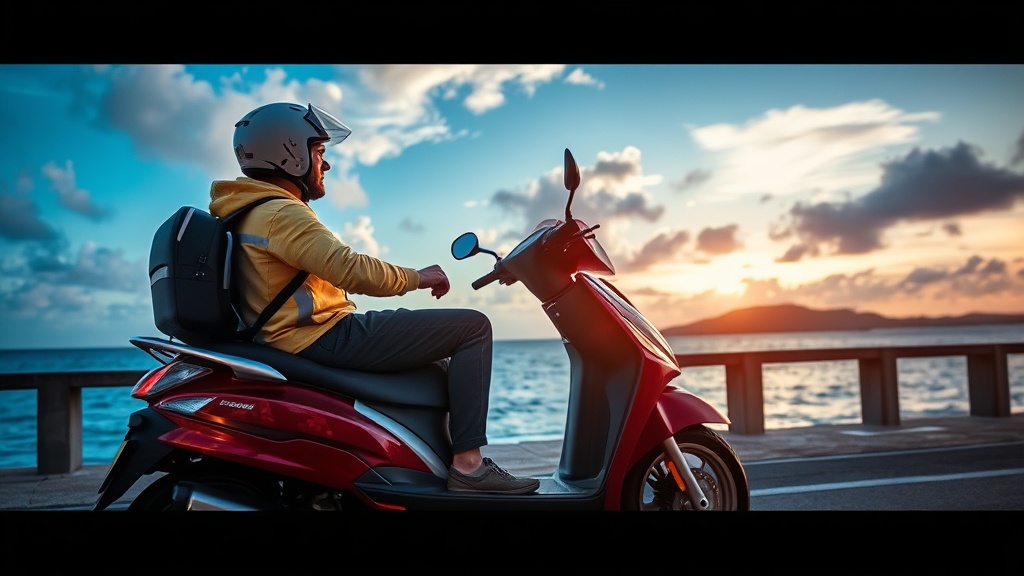
Should You Rent a Scooter or Hire a Driver on Your Island Trip?

What You'll Learn About Getting Around Tropical Islands
This guide breaks down the real trade-offs between independent scooter rentals and private driver services across tropical island destinations. You'll understand which option saves money (and where it doesn't), what licensing and insurance headaches to expect, which islands have roads suitable for two wheels versus those where you'd be risking life and limb, and how to negotiate fair rates with local drivers without getting the "tourist tax." By the end, you'll know exactly which transportation mode fits your specific island itinerary—whether you're hopping between beaches in Bali, exploring volcanic coastlines in Hawaii, or winding through Caribbean mountain roads.
Why Do Some Islands Make Scooter Rentals Irresistible While Others Make Them Impossible?
The answer starts with infrastructure—and I'm not just talking about pavement quality. Islands like Thailand's Koh Samui, Vietnam's Phu Quoc, and Indonesia's Gili Islands have embraced scooter culture completely. You'll find rental shops every hundred meters, repair services on every corner, and roads designed (or at least adapted) for narrow two-wheel traffic. The flat coastal routes make zipping between beaches genuinely pleasant, and parking is rarely an issue—you can typically squeeze a scooter anywhere.
But then you hit places like Jamaica's inland roads, St. Lucia's winding mountain passes, or Moorea's steep volcanic ridges. Here, scooter rental shops exist, but locals will look at you like you're considering a death wish. These roads weren't built for casual tourists on 125cc bikes. Blind corners, precipitous drops, aggressive local drivers who know every curve by memory, and sudden tropical downpours that turn asphalt into ice rinks—these factors transform what looks like freedom into genuine hazard. I've watched confident European motorcyclists (the kind who ride year-round at home) white-knuckle their way through Dominica's roads and return their scooters within hours, shaken and poorer for the experience.
The licensing question complicates things further. Technically, many Southeast Asian islands require an International Driving Permit (IDP) with a motorcycle endorsement. Enforcement varies wildly—Bali's police run frequent roadside checkpoints targeting tourists, while Phu Quoc rarely bothers. But here's what the rental shops won't tell you: your travel insurance likely becomes void if you crash without proper licensing. That $5/day scooter rental suddenly looks expensive when you're paying thousands out-of-pocket for a broken collarbone. The UK's official guidance on international driving requirements offers a starting point, but always verify specific country reciprocity before you travel.
How Much Does Hiring a Driver Actually Cost Compared to DIY Scooter Rentals?
The math surprises most travelers. A scooter in Bali or Thailand runs roughly $5-8 per day. A private driver with air-conditioned SUV typically costs $40-60 for a full day (8 hours). At first glance, the scooter wins by a landslide—until you calculate the real costs.
Factor in fuel (minimal for scooters, but still), the inevitable parking fees at tourist sites (often $1-3 per stop), the "scam repairs" when something mysteriously breaks and the rental shop blames you (budget $20-50 for creative damage claims), and the value of your time spent haggling, handling, and finding gas stations. Then consider what happens when it rains—because it will. You're soaked, miserable, and suddenly that $50 driver fee looks like the bargain of the century.
Group dynamics change the equation entirely. Solo traveler? The scooter probably makes financial sense. Couple? Now you're renting two scooters or sharing one awkwardly (and many islands prohibit two-up riding for tourists). Family of four? The private driver becomes cheaper per person while eliminating the "where do we park four scooters" headache. Lonely Planet's practical money-saving strategies suggest that transportation choices often determine a trip's overall budget more than accommodation.
Driver quality varies enormously, and this is where research pays dividends. The best drivers become informal guides—knowing which beach has the best snorkeling at today's tide, which restaurant serves locals rather than tour groups, when to visit attractions to avoid cruise ship crowds. The worst are counting minutes until they can dump you at overpriced souvenir shops paying them commission. Platforms like TripAdvisor and Google Reviews help, but asking recent travelers in your accommodation often yields better intelligence. Look for drivers mentioned by name in reviews—that's the gold standard.
Negotiating Fair Rates Without Getting Ripped Off
Here's the protocol that actually works. First, never book through your hotel's concierge desk without comparing—they typically take 30-50% commission. Walk to nearby streets where drivers wait (every tourist area has them) and get three quotes. The first quote is always inflated; expect to negotiate down 20-30%. Clarify exactly what's included: fuel, tolls, parking, waiting time, and overtime charges. Get it in writing—a photo of a written agreement on your phone prevents "misunderstandings" later.
Half-day bookings (4 hours) should cost 60-70% of full-day rates, not 50%. Drivers have fixed costs regardless of duration. For multi-day arrangements, insist on the same driver throughout—continuity matters, and you'll get better service once they know your preferences. Tipping isn't mandatory but builds goodwill; 10% for good service is standard.
What Insurance and Safety Issues Should Worry You Most?
Scooter accidents represent the leading cause of tourist injury and death across Southeast Asia and the Caribbean. Not drowning. Not food poisoning. Scooters. The statistics are grim enough that the CDC specifically warns about motor vehicle safety abroad as a major travel health concern.
Travel insurance policies vary dramatically in scooter coverage. World Nomads covers scooters up to 125cc with proper licensing—crash without an IDP, and you're paying medical bills yourself. SafetyWing excludes scooters entirely from some plans. Credit card travel insurance almost never covers motorized two-wheelers. Read the fine print. Then read it again.
Helmet quality at rental shops ranges from legitimate DOT-certified protection to decorative plastic hats that crack on impact. Bring your own if you're serious about safety, or at minimum inspect the foam lining—crumbling foam means the helmet has been dropped and compromised. Check brake function before leaving the shop (squealing usually means worn pads). Photograph existing scratches and damage with the rental agent present; email the photos to yourself with a timestamp.
Private drivers eliminate most injury risk but introduce different concerns. Vehicle maintenance standards vary. Seatbelts may be missing or non-functional. If you're genuinely safety-conscious (and traveling with family, you should be), inspect the vehicle before committing. Working seatbelts for all passengers, tread on tires, functioning lights—these basics aren't guaranteed.
When Does a Mix of Both Options Make the Most Sense?
Smart travelers often combine approaches—and islands facilitate this well. Use private drivers for longer inter-island transfers, mountain excursions, or any route involving highway speeds and heavy traffic. Switch to scooters (or even bicycles) for flat coastal explorations where distances are short and scenery matters more than speed.
Many islands now offer Grab or Gojek-style apps (Grab operates across Southeast Asia; similar services exist in Caribbean territories with varying reliability). These work brilliantly for one-way trips—airport transfers, dinner outings where you'll drink, or when weather turns. You get pricing transparency and driver tracking without day-long commitments. Download and set up these apps before you travel; they require phone verification that can be tricky with international roaming.
For genuine island-hopping itineraries—moving between islands rather than exploring one—scooters rarely make sense. Ferries charge vehicle transport fees that accumulate fast, and you'll waste precious vacation hours returning rental bikes to original shops. In these scenarios, light packing and driver services at each destination outshine the independence of two wheels.
The bottom line? Your transportation choice shapes your entire island experience. Scooters offer freedom, adventure, and intimacy with landscapes—when conditions are right. Drivers offer comfort, safety, local knowledge, and stress elimination—at a cost that often represents better value than it first appears. Match the mode to your skills, your travel companions, the specific island's roads, and the nature of each day's activities. Neither option is universally correct—but one is definitely correct for your particular trip.