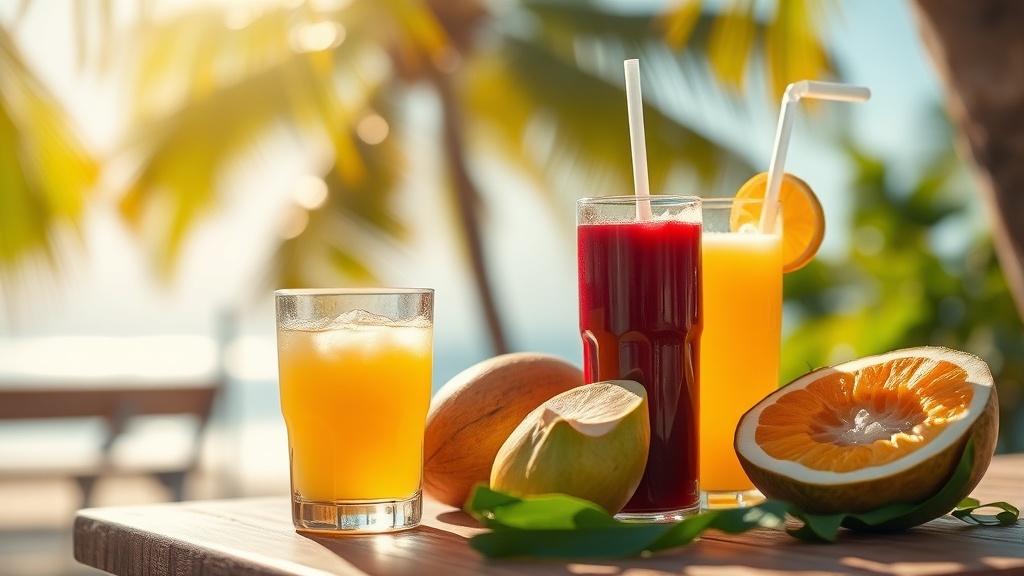
Sipping Tropical Sunshine with Local Fruit Juices and Coconut Water

You will learn how to identify the best fresh fruit juices, understand the nutritional benefits of coconut water, and know exactly what to look for when buying tropical beverages in local markets. This guide covers the varieties of fruit juices common in tropical regions, the science behind coconut water hydration, and how to avoid low-quality or overly processed options while traveling. Understanding these details ensures you stay hydrated and nourished during your island hops.
What are the best tropical fruit juices to try?
The best tropical fruit juices are those made from freshly pressed, seasonal fruits like mango, passion fruit, guava, and pineapple. While many tourists settle for bottled juice, the real magic happens at roadside stands where the fruit is often harvested that same morning.
Mango is the heavy hitter here. If you find a real Kent or Alphonso mango, the juice is thick, velvety, and incredibly sweet. It’s a far cry from the thin, sugary syrups you find in grocery stores back home. Then there is passion fruit (also known as maracuja). It’s tart, almost aggressively so, but it provides a sharp contrast to the sweeter juices. You'll often see it mixed with water or diluted with a bit of honey to make it more palatable for those not used to high acidity.
Guava is another staple. It has a distinct, floral aroma and a creamy texture that makes it feel more like a snack than a drink. If you're visiting Southeast Asia or the Caribbean, you'll see guava juice everywhere. It's thick and incredibly satisfying.
A quick tip: if the juice looks translucent and thin, it's likely heavily diluted with water and sugar. Real fruit juice should have some level of opacity and a slight pulp or sediment at the bottom. It's a sign of authenticity (and better nutrition, too).
Common Tropical Juice Varieties
Not all tropical juices are created equal. Depending on where your plane lands, your options will shift significantly. Here is a quick breakdown of what to expect in different regions:
| Fruit Type | Flavor Profile | Best Region to Find It |
|---|---|---|
| Mango | Sweet, creamy, lush | India, Thailand, Mexico |
| Passion Fruit | Tart, acidic, aromatic | Brazil, Caribbean, Vietnam |
| Guava | Floral, dense, sweet | Caribbean, Central America |
| Dragon Fruit | Mild, earthy, subtle | Southeast Asia, Central America |
If you are interested in how these flavors change based on local agriculture, you might enjoy reading about the island flavors and spices of the Indonesian Archipelago. The spice and fruit profiles change drastically as you move across different latitudes.
Is coconut water better than sports drinks?
Coconut water is often superior to commercial sports drinks for hydration because it provides a natural source of electrolytes like potassium, magnesium, and sodium without synthetic additives. While a Gatorade might get the job done in a pinch, it's packed with high-fructose corn syrup and artificial dyes that can leave you feeling sluggish.
Pure coconut water is a powerhouse. It is essentially a natural isotonic beverage. When you are sweating under a tropical sun, your body loses more than just water; it loses salts. Coconut water replenishes these salts naturally. It’s a lifesaver after a long trek through a jungle or a long day of snorkeling.
The Wikipedia entry on coconut water provides a deep dive into its chemical composition, but for the casual traveler, the takeaway is simple: it works. However, don't expect it to taste like a soda. It has a subtle, slightly nutty, and mildly sweet flavor. If it tastes salty or "off," it has likely fermented—toss it immediately.
I always carry a reusable stainless steel straw in my bag. It’s a small way to avoid the plastic waste that comes with drinking from individual coconut shells or plastic cups. It also makes the process of drinking through a straw in a coconut much smoother.
- Look for the green: Young, green coconuts generally have more water and a sweeter, lighter taste.
- Check the shell: If you're buying a pre-cut coconut, ensure the flesh looks bright and white, not yellow or brownish.
- The "Shake" Test: Shake the coconut. If you hear liquid sloshing around, it's full. If it sounds hollow or silent, it's likely dried out.
- Avoid the "Too Much Sugar" Trap: If you're buying bottled coconut water, check the label for "added sugars." The best brands, like Vita Coco, often have very little, but many "tropical" brands add a lot of cane sugar.
How do I find the freshest juice in a local market?
The best way to find fresh juice is to look for vendors who are actively peeling and processing fruit right in front of you. You want to see the "process" happening in real-time. If a vendor has a pile of bruised, pre-cut fruit sitting in a plastic tub, skip it.
I've learned the hard way that "fresh" can sometimes mean "risky" if you aren't careful. In many tropical markets, hygiene standards might be different than what you're used to in Philadelphia. This doesn't mean you shouldn't enjoy the local treats, but you should be smart about it.
Look for a high turnover of customers. If a juice stand is busy, it means the fruit is being used quickly and isn't sitting in the heat for hours. A busy stand is a sign of freshness. Also, watch how they handle the fruit. Are they using clean utensils? Is the juice being poured into a clean glass or a fresh fruit shell? These small details matter.
"The best way to experience a culture is through its flavors, but the safest way to experience them is through high-turnover street food stalls."
When you're navigating these areas, keep an eye out for the local-specific fruits. For example, in parts of the Caribbean, you might find more hibiscus-based drinks, while in Southeast Asia, you'll see more lychee or rambutan-based juices. If you're looking for more tips on how to navigate these environments without getting lost or overwhelmed, check out my guide on finding and navigating remote tropical island markets.
One thing to watch out for is the "sugar spike." Tropical fruit juices are incredibly high in natural sugars. While they are better than soda, drinking three glasses of pure mango juice in a row will likely lead to a massive crash. I prefer to mix my fruit juices with a bit of sparkling water or plain water to keep the sugar levels manageable. It makes the drink more refreshing and less of a dessert.
It's also worth noting that many of these juices are much cheaper than bottled water in some regions. In many islands, a fresh coconut will cost you a fraction of what a branded bottle of water would. It's a win for your wallet and a win for the environment if you're using a reusable cup or a shell.
The quality of the fruit is everything. If you see a vendor with a beautiful, vibrant display of whole fruits, that's your target. If the fruit looks dull or the skins are wrinkled, the juice will be lackluster. Don't be afraid to ask the vendor what the "specialty" of the day is. Often, they'll have a seasonal fruit that isn't on the standard menu, and those are always the most delicious.
If you're worried about the sun and dehydration, remember that a well-hydrated body handles heat much better. Drinking plenty of coconut water throughout the day is a great way to keep your electrolytes balanced while you're out on the beach or exploring a coastal trail.